
Roman Mosaics
How to produce a mosaic floor in Romano-British style
Firstly, the roman artists and artisans who created floor mosaics often
worked with a limited palette which largely depended on the local materials
available:
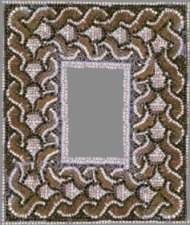 Reds
and Browns: Broken bricks and rooftiles
Reds
and Browns: Broken bricks and rooftiles
Yellows: Limestone
Blacks and Greys: Slate
White: Chalk
Although each mosaic is a unique piece the actual designs were often bought 'off the shelf' from pattern books. Aboout 850 individual tesserae (the little squares that make up the mosaic) would be used for each square foot (a very approximate average) which means that even a simple room mosaic (9 x 12 foot) would easily have many more than 100,000 pieces.
To produce a long-lasting floor, rubble hardcore was covered in concrete
to form a smooth base surface. The pattern was scratched or painted onto the
surface and then the long process of laying the mosaic could begin. A small
area of wet mortar was set down and the tesserae would be set into it before
it dried. The tesserae themsleves could be anything from 1 cm to 6 cm square.
CB 2003-10