
Fieldwalking find
Found 14/03/2004
Mesolithic bladelet from Thames Valley (near Reading, Berkshire)
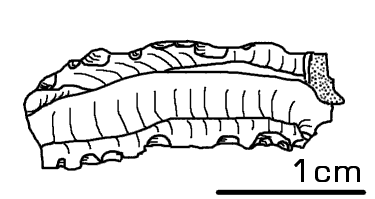
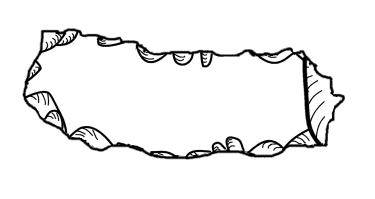
This bifaced blade about 2cm long is 1cm wide and just a quarter centimetre deep. Dotted region on right (upper illustration) is original outer surface of nodule (the cortex). In colour, the whole piece it is a semi-translucent creamy flint with a milky patina. The bulb of percussion (showing where the flake was struck of a larger piece of flint) is on the left.
This is a fine example of mesolithic flintknapping. It's small size
It was found on the surface of a ploughed field on a sunny morning following 2 days of rain that had washed the surface stones clean, making worked flints easy to find. Fieldwalking is an important aspect of archaeological research, producing distribution information and informing archaeologists of possible locations for further investigation. This was just one of 15 good mesolithic and bronze age worked flints I found that morning.
Find out lots more about how flint tools were made.