
 Introduction
to henges
Introduction
to henges
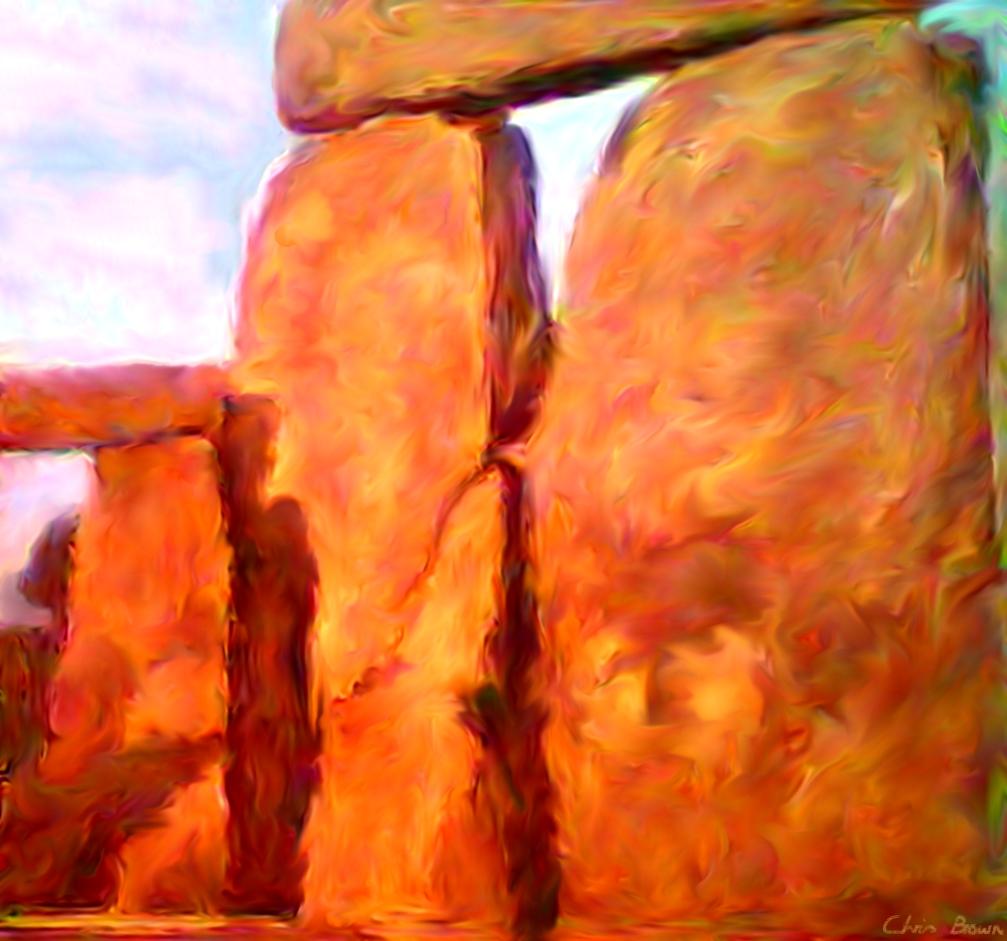
Stonehenge is certainly the most famous british 'henge monument'. Other archaeologicical sites with similar names include 'woodhenge' and 'seahenge'. When people talk about henges, other sites such as Avebury and Stanton Drew are often also mentioned.
What is a henge?
Technically, a henge is an earthwork enclosure. The difference between a henge and any other bank of earth with a ditch beside it is that a henge has the bank on the outside and the ditch within. This gives us a big clue as to the purpose of henges. If they were for defence, then it would make much more sense to put the ditch outside the bank. Therefore we cn be pretty certain that henges were never originally built as a physical defense from attacking armies.
Where is the henge at Stonehenge?
Over thousands of years the action of ploughing has leveled the henge to practically nothing, but it is still visible, just. Its radius is about 3 times the radius of the circle of standing stones which were a later addition. However, at Stonehenge, the ditch is outside the bank, so technically it isn't even a proper henge!
Who built the henges?
If the builders of the henges could put so much time and effort into structures that weren't for defence, then we can assume that they lived in a relatively stable period of history. Around 4000 to 5000 years ago, the people living on the British Isles dug great ditches and built massive earth walls that still inspire people today.We believe henge building was carried on by the bronze age peoples between around 2500BC to 1000BC.
Where are the henges?
Mostly in Wiltshire on rolling hills made of chalky soils aabove fertile flatlands around the river Kennet.
How were the henges built?
Clarly there were no machines so human labour did all the work. Evidence of tools includes bone antler shovels and stone axes.
Why did people build henges?
People built henges to fullfil a need in their lives. Beyond that we are into conjecture. There is clearly an astronomical element to many henge monuments but they are not likely to be advanced astronomical research posts. Henges were most likely built as tribal gathering places for seasonal observances.