
 |
 |
 |
 |
 |

|
August 2003
 The
protection from ploughing of Verulamium fields has been hailed as a victory
for conservation and archaeology in the UK. The Gorhambury estate has agreed
to permanently abandon plans to plough fields by the Hemel Hempstead Road following
a two year campaign.
The
protection from ploughing of Verulamium fields has been hailed as a victory
for conservation and archaeology in the UK. The Gorhambury estate has agreed
to permanently abandon plans to plough fields by the Hemel Hempstead Road following
a two year campaign.
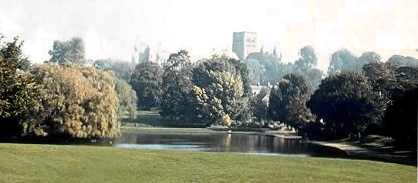
The Roman city of Verulamium lies just 20 miles from London, beneath the soil near modern day St. Albans in Hertfordshire, UK. The soil here is of high quality and modern industrial deep ploughing is a very profitable industry for the farmers. Sadly for archaeologists, it also destroys artifacts and their contexts leaving little for us to study.
The good news is that this particular site, which has produced artifacts from 5th and 6th Centuries will now be used for grazing livestock, thereby protecting the undersoil from the distructive effects of deep ploughing.
This local victory saw the Estate, town council, local archaeologists and English Heritage come to an agreement which safeguards part of the
The origins of Verulamium predate the Roman invasion. In the first century BC the high status settlement of Verlamion was founded by the Catuvellauni tribe who minted coins there. The Romans arrival in 50 AD saw the rapid growth of a town, only for it to be raised by fire 11 years later during the Boudiccan revolt. Once rebuilt the town prospered for the next 300 years and perhaps for far longer than that.
A fantastic museum and some great remains of walls and a roman theatre are to be seen by visitors to the site of Verulamium which sits near the junction of the M1 and M25 motorways 20 miles noth of London.
CB 2003
Copyright 2002-2004 newarchaeology.com