
Neolithic Tools and Weapons
We often make the mistake of seeing our ancestors as primitive. Especially when we think of the ancestors from before the dawn of metal use, 4000 or so years ago. However, we really should not underestimate these people. Proof of this can be found in the long tradition of stone, wood and bone tool use that predates metalurgy and which has left us a rich heritage worthy of examination.
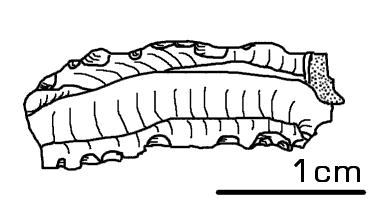
From the smallest bladelet to the biggest hand axe, the neolithic peoples were remarkably efficient at making stone tools.
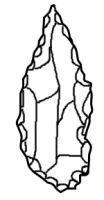
The first thing to note about stone tools is that similar early metal tools are actually not much of an improvement. A sharp flint blade may blunt quickly, but when fresh it is several hundred times sharper than a metal edge. Metalurgy was a quantum leap because it allowed for the development, of new tools, but reconstructive archaeology from modern flint knappers shows us that the new knives and axes were not that much more impressive than the old tools.
The neolithic is a translation of 'new stone age' but a better term for the period would have been th 'wood' age. The shaping and development of of wooden tools was central to neolithic life. However, because it doesn't survive so well in the archaeological record we are apt to forget its significance. A wooden club was most likely the favoured close combat weapon of the time, just as many native american tribes and australian aborigines favoured wooden battle weapons over stone until recent times.
Of course, the bow and arrow was in use in the neolithic, and the chance discovery of Otzi in the alps in the 1980's gave us the opportunity to see in detail the perfectly preserved hunting kit of a stone age man.